
Chúa ở cùng chúng ta – Emmanuel
Exhibition · Saigon, 2025
Ceramic works · Sacred imagery · Bien Hoa heritage · Catholic · Ancient · Culture
Just as the Word of God is proclaimed in countless languages around the world, it may also be seen through the artistic traditions native to the places where people are born and raised. True to the name Emmanuel—”God with us”—artist Lê Trung Hiếu reimagines Catholic narratives and iconography through the familiar visual language of An Nam culture, allowing the Christian faith to become more intimate and deeply resonant within the cultural landscape of its own people.
This body of work challenges the perception that Christian art belongs solely to the Western aesthetic tradition. Through the rich palette, enduring craftsmanship of traditional Biên Hòa ceramics, and visual motifs rooted in East Asian culture, Lê Trung Hiếu presents the presence of God in a vivid and culturally grounded form. His works celebrate the beauty of Vietnamese ceramic heritage while opening new perspectives on the dialogue between faith and culture.
About the Collection
Emmanuel – God With Us
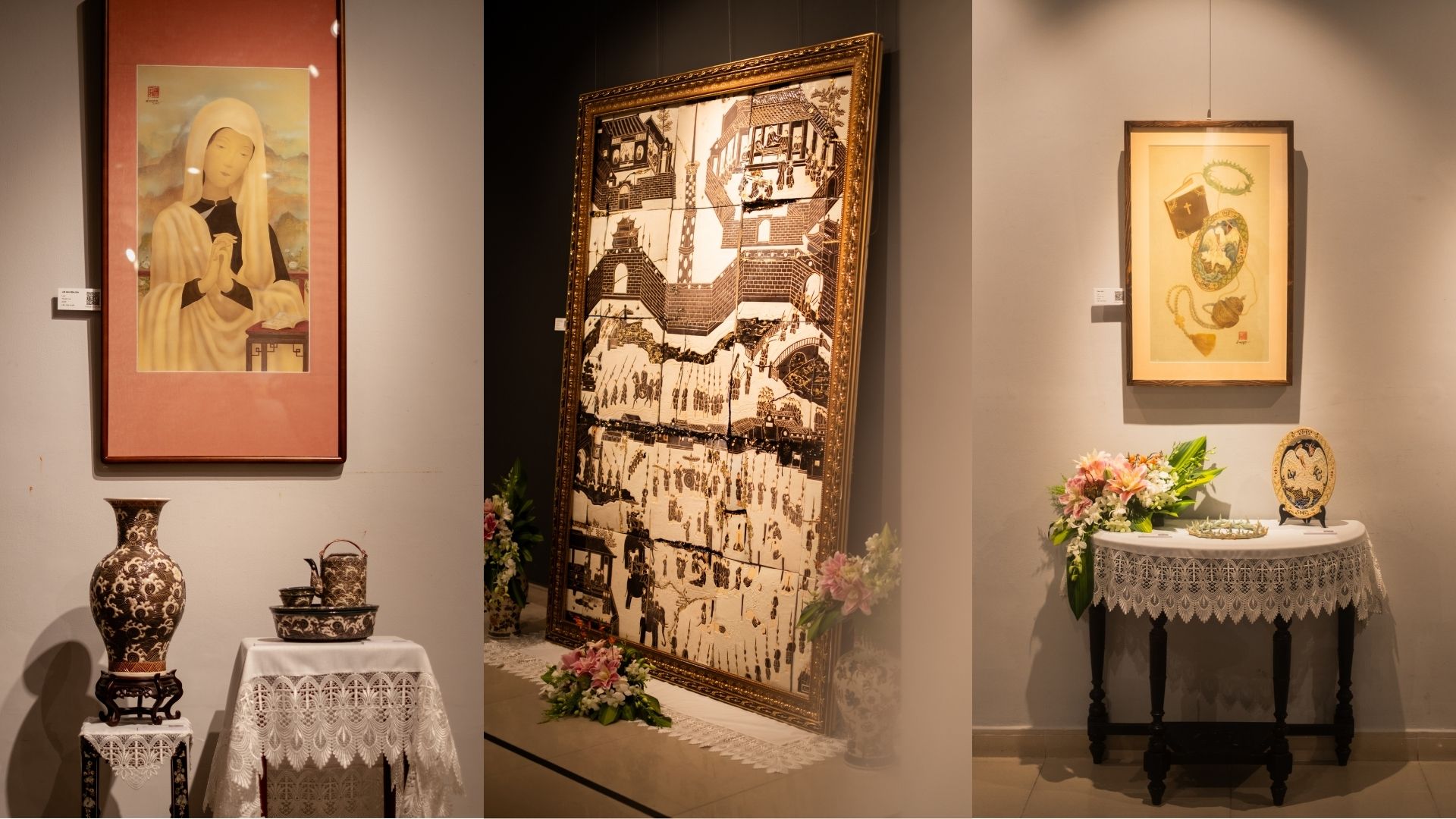
Emmanuel – God With Us continues artist Lê Trung Hiếu’s exploration of the traditional ceramic heritage of Biên Hòa. Throughout his practice, he has been dedicated to reviving historic ceramic-making techniques, from hand-forming and glaze composition to the use of ash and stone glazes fired in wood-burning kilns—methods that once defined the distinctive identity of Biên Hòa ceramics.
As both a young artist deeply committed to Vietnamese cultural heritage and a devoted Catholic, Lê Trung Hiếu seeks to create a dialogue between Christian faith and indigenous artistic traditions. Through this collection, biblical narratives, Christian theology, and sacred iconography are reinterpreted using the visual language, decorative motifs, and philosophical sensibilities of East Asian art, allowing the Gospel to be experienced within the cultural context of Vietnam.
For nearly five centuries, since Christianity first took root in Vietnam, generations of missionaries, artisans, and Vietnamese Catholics have expressed their faith through architecture, sculpture, painting, literature, and traditional crafts. Continuing this legacy, Lê Trung Hiếu has immersed himself in the study of early vernacular prayer books written in chữ Nôm, historical churches, sacred sites, and Vietnamese Catholic artistic traditions. Each work in the collection is the culmination of historical research, theological reflection, and artisanal craftsmanship.
Several pieces draw inspiration from the earliest Catholic texts written in chữ Nôm, where the Holy Names of Jesus and Mary were rendered in the Vietnamese vernacular script. These sacred names are encircled by floral ornaments, auspicious foliage, and flaming cloud motifs—decorative elements traditionally associated with honor, virtue, and divine radiance in Vietnamese art. Through this synthesis, Christian devotion is expressed in a distinctly local visual vocabulary.
The Holy Spirit is represented as a dove, yet assumes the majestic posture of the imperial phoenix found in Nguyễn Dynasty decorative art. Surrounding the figure is a halo of flames inspired by the mural paintings of the Dunhuang Grottoes, while jade-green lotus branches symbolize purity, wisdom, and the boundless compassion of God. Familiar Christian imagery is thus reimagined through the aesthetic language of East Asia without compromising its theological significance.
This dialogue between East and West continues in the sculptural forms themselves. One incense burner is conceived as a church bell tower, complete with Gothic pointed arches, while its roof recalls the traditional architecture of Vietnamese communal houses. The vessel rests upon an elegantly pierced base carved with flowing cloud motifs, creating a harmonious union of Western ecclesiastical architecture and Vietnamese decorative traditions.
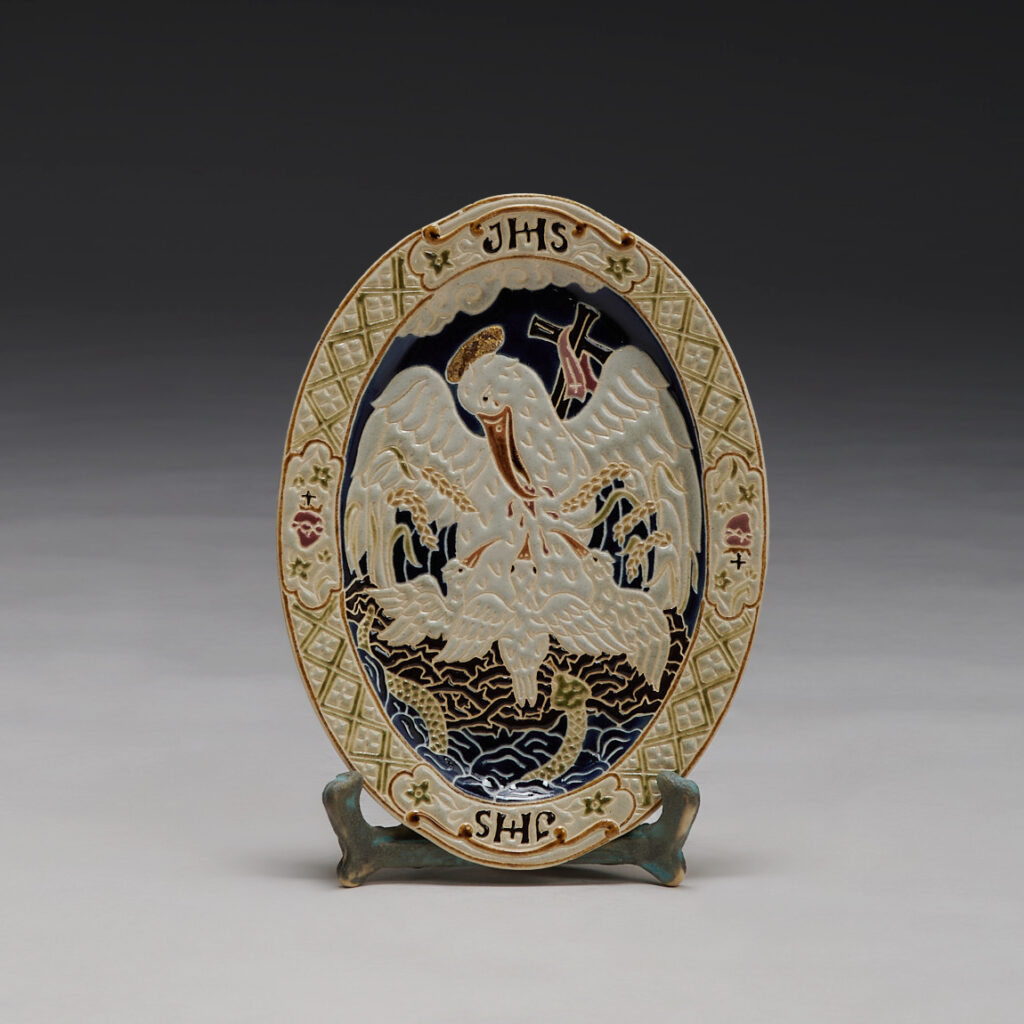
The collection also revisits enduring symbols of Christian sacred art—including the pelican feeding its young with its own flesh, a traditional emblem of Christ’s sacrificial love and the Eucharist, as well as the Christogram IHS. These symbols are interpreted through the decorative language and ceramic techniques of Biên Hòa, offering a renewed visual expression that is at once deeply Catholic and unmistakably Vietnamese.
The centerpiece of the exhibition is the monumental ceramic work “The Martyrdom of Saint Francis Xavier Nguyễn Cần in the Citadel of Hanoi,” measuring 1.6 by 2 meters. Executed in a continuous narrative format, the composition depicts successive moments in the saint’s final journey—from his arrest and interrogation, through imprisonment and public trial, to his execution. Despite relentless persecution, Saint Nguyễn Cần remained steadfast in his faith, consoling fellow prisoners, proclaiming the Gospel, and encouraging those around him until his final moments. His earthly life ended by execution with a wire noose, yet his martyrdom became an enduring witness to unwavering faith and complete devotion to God.
For Lê Trung Hiếu, each work is more than an exercise in ceramic artistry or craftsmanship; it is a prayer formed through earth, water, fire, and the human hand. Through the medium of Biên Hòa ceramics, Emmanuel – God With Us proposes a renewed vision of Christian art—one in which faith encounters local culture, tradition embraces contemporary creativity, and beauty becomes a bridge leading viewers toward the sacred.
Exhibition: Emmanuel
Venue: Hội Mỹ Thuật thành phố Hồ Chí Minh, Việt Nam
City: Sài Gòn, Việt Nam
Year: 2025
Photography: Quang Trần